|
Legal & Tax Disclosure
ATTORNEY ADVERTISING.
This article is provided for general informational purposes only and does not constitute legal, financial, or tax advice. Reading this content does not create an attorney-client or professional advisory relationship. Laws vary by jurisdiction and are subject to change. You should consult a qualified professional regarding your specific circumstances. |
Emily thought she had everything covered. Her mother’s will was clear, leaving everything equally to Emily and her brother, Mac. But Mac, fueled by years of resentment, challenged the will, claiming their mother lacked capacity when she signed it. Emily prepared for a straightforward will contest, only to be blindsided by Mac’s demand for a jury trial. What she didn’t realize is that a jury trial in probate isn’t automatic, and obtaining one can be incredibly difficult – costing her tens of thousands in legal fees just to attempt to get twelve strangers involved.
As an Estate Planning Attorney and CPA with over 35 years of experience here in Moreno Valley, I’ve seen this scenario play out countless times. People assume the civil court rules apply wholesale to probate, but that’s a dangerous misconception. The right to a jury trial in probate is severely limited, and navigating these limitations requires a deep understanding of both estate law and the practical realities of the Riverside County courts. The biggest hurdle is establishing a genuine “trialable issue of fact.”
What Qualifies as a “Trialable Issue of Fact?”
Simply disagreeing with the will’s terms isn’t enough. The court needs to see evidence that, if presented to a jury, could reasonably lead to a different outcome. Mac’s claim of incapacity, for example, is a trialable issue if there’s conflicting medical testimony, evidence of unusual behavior before the signing, or inconsistencies in the will itself. However, a challenge based solely on a beneficiary’s disappointment or a vague assertion of undue influence without concrete proof won’t cut it.
The standard is higher than in many civil cases. The judge will conduct an evidentiary hearing, often called a “trial setting conference,” to determine if a jury trial is appropriate. This is essentially a mini-trial focused on the evidence supporting the jury demand, not the merits of the case itself. If the judge finds no genuine trialable issue of fact, the trial will proceed as a court trial – meaning the judge decides the outcome.
What Happens If You Lose the Jury Trial Battle?
This is where costs can spiral. Filing the initial demand for a jury trial isn’t expensive, but the expenses associated with preparing for and conducting a jury trial in probate are substantial. You’ll face increased costs for:
- Discovery: Extensive depositions, document requests, and subpoenas (under Probate Code § 1000) to gather evidence supporting your case.
- Expert Witnesses: Medical experts are almost always required in capacity challenges, and their fees are significant.
- Jury Instructions: Crafting complex instructions tailored to probate law can be time-consuming and costly.
- Lengthy Court Proceedings: Jury trials take far longer than court trials, increasing attorney fees and court costs.
And, importantly, if you lose the motion for a jury trial, you may be responsible for paying your brother’s attorney’s fees incurred in opposing the demand. This is a critical risk factor often overlooked by clients.
What About Challenges to Asset Ownership?
Sometimes the dispute isn’t about the validity of the will, but who owns a specific asset. For example, “Mom put my name on the deed, but the estate claims it.” These “title disputes” are handled through a Probate Code § 850 Petition, effectively allowing the Probate Court to act as a civil court for the purpose of determining ownership. In these cases, you have a much stronger argument for a jury trial, as property ownership is inherently a question of fact for a jury.
However, even here, the judge will scrutinize the evidence to ensure there’s a legitimate dispute requiring a jury’s input. A clear deed with no evidence of fraud or undue influence is unlikely to warrant a jury trial.
The CPA Advantage: Valuation & Tax Implications
As a CPA as well as an attorney, I understand the financial complexities underlying these disputes. Often, the value of the estate itself is at issue. Correctly valuing assets – especially closely held businesses – is crucial. A faulty valuation can significantly impact capital gains taxes, the estate’s overall tax burden, and ultimately, what beneficiaries receive. Plus, the “step-up in basis” rules add another layer of complexity. A jury may not understand these nuanced tax issues, highlighting the need for strong expert testimony and a clear presentation of the financial implications.
How do enforcement rules in California probate court shape outcomes for heirs and fiduciaries?
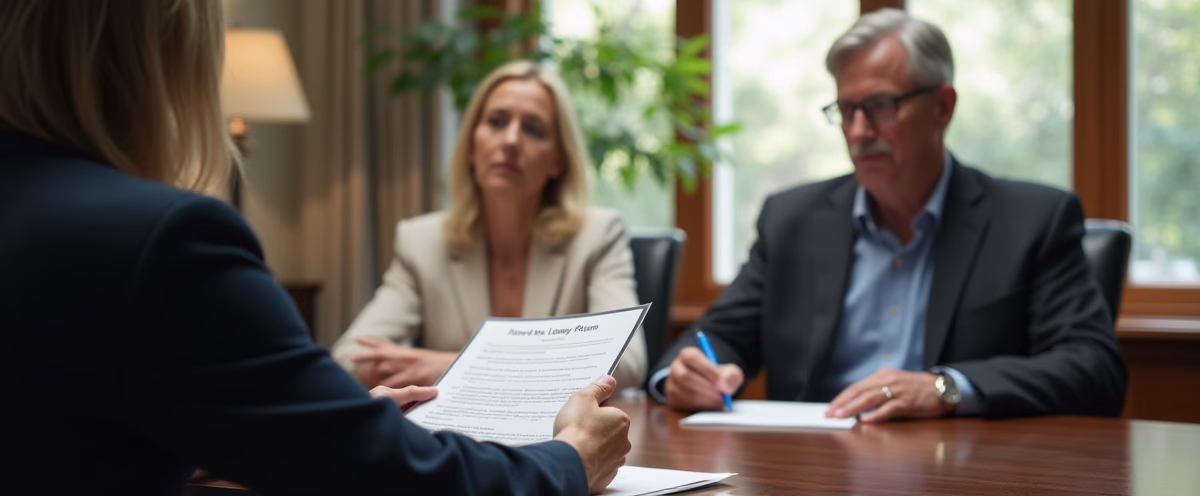
California probate is designed to provide court-supervised transfer of property, yet cases often break down when authority is unclear, required steps are missed, or disputes arise over assets, notice, and fiduciary conduct. When the process is misunderstood, families can face avoidable delay, escalating conflict, and increased exposure to creditor issues, hearings, or litigation before the estate can close.
To manage the estate’s value, separate property types by learning probate assets, confirm exclusions through assets that bypass probate, and support valuation steps with probate inventory requirements to reduce disagreements about what is in the estate.
California probate is most manageable when authority is documented early, assets are classified correctly, and procedure is followed consistently from petition through closing. When the process is approached with realistic expectations about notice, claims, accounting, and dispute risk, the estate is more likely to move toward closure without avoidable conflict or delay.
Verified Authority on California Probate Litigation
-
Double Damages (Bad Faith Taking): California Probate Code § 859
The “nuclear option” of probate litigation. If the court finds that a person has in bad faith wrongfully taken, concealed, or disposed of property belonging to the estate, the judge may assess liability for twice the value of the property, in addition to recovering the asset itself. -
Grounds for Removal of Executor: California Probate Code § 8502
This statute lists the specific legal reasons a judge can fire a Personal Representative. Common grounds include wasting or mismanaging assets, neglecting the estate (moving too slow), or having an incurable conflict of interest with the beneficiaries. -
The “850 Petition” (Title Disputes): California Probate Code § 850
Probate litigation often revolves around ownership. This powerful petition allows the probate court to solve title disputes without filing a separate civil lawsuit. It is used when an asset is titled to a third party but belongs to the estate (or vice versa). -
Presumption of Undue Influence (Caregivers): California Probate Code § 21380
To prevent elder abuse, California law makes it incredibly difficult for paid caregivers to inherit from their patients. The law presumes the gift was the result of undue influence, forcing the caregiver to prove their innocence in court, often requiring a “Certificate of Independent Review.” -
Civil Discovery Rules Apply: California Probate Code § 1000
Probate is not just administrative; it is a court of law. This code section confirms that the standard rules of civil practice apply. This means litigators can use interrogatories, depositions, and demands for production of documents to build their case against a rogue executor. -
Extraordinary Fees (Litigation Costs): California Probate Code § 10811
Litigation is not covered by the standard statutory fee. Attorneys can petition the court for “extraordinary fees” for litigation services (e.g., defending a will contest or recovering stolen property). These fees are billed hourly and must be approved by the judge.
|
Attorney Advertising, Legal Disclosure & Authorship
ATTORNEY ADVERTISING.
This content is provided for general informational and educational purposes only and does not constitute legal, financial, or tax advice. Under the California Rules of Professional Conduct and State Bar advertising regulations, this material may be considered attorney advertising. Reading this content does not create an attorney-client relationship or any professional advisory relationship. Laws vary by jurisdiction and are subject to change, including recent 2026 developments under California’s AB 2016 and evolving federal estate and reporting requirements. You should consult a qualified attorney or advisor regarding your specific circumstances before taking action.
Responsible Attorney:
Steven F. Bliss, California Attorney (Bar No. 147856).
Local Office:
Moreno Valley Probate Law23328 Olive Wood Plaza Dr suite h Moreno Valley, CA 92553 (951) 363-4949
Moreno Valley Probate Law is a practice location and trade name used by Steven F. Bliss, Esq., a California-licensed attorney.
About the Author & Legal Review Process
This article was researched and drafted by the Legal Editorial Team of the Law Firm of Steven F. Bliss, Esq.,
a collective of attorneys, legal writers, and paralegals dedicated to translating complex legal concepts into clear, accurate guidance.
Legal Review:
This content was reviewed and approved by Steven F. Bliss, a California-licensed attorney (Bar No. 147856). Mr. Bliss concentrates his practice in estate planning and estate administration, advising clients on proactive planning strategies and representing fiduciaries in probate and trust administration proceedings when formal court involvement becomes necessary.
With more than 35 years of experience in California estate planning and estate administration,
Mr. Bliss focuses on structuring enforceable estate plans, guiding fiduciaries through court-supervised proceedings, resolving creditor and notice issues, and coordinating asset management to support compliant, timely distributions and reduce fiduciary risk. |