
|
Legal & Tax Disclosure
ATTORNEY ADVERTISING.
This article is provided for general informational purposes only and does not constitute legal, financial, or tax advice. Reading this content does not create an attorney-client or professional advisory relationship. Laws vary by jurisdiction and are subject to change. You should consult a qualified professional regarding your specific circumstances. |
I recently met with Emily, a distraught client whose mother had passed away. Emily’s older brother, acting as executor, had meticulously handled the probate, but a misplaced codicil – a handwritten amendment to the will – caused a significant delay and ultimately, a legal battle with her sister. It cost Emily’s family over $15,000 in legal fees, all because of a poorly documented change to their mother’s wishes. This scenario, unfortunately, is far too common. Proper documentation, even seemingly minor forms, is crucial to a smooth probate process. And one of those often-overlooked forms is the Receipt of Distribution.
Why is a Receipt of Distribution Form Important?
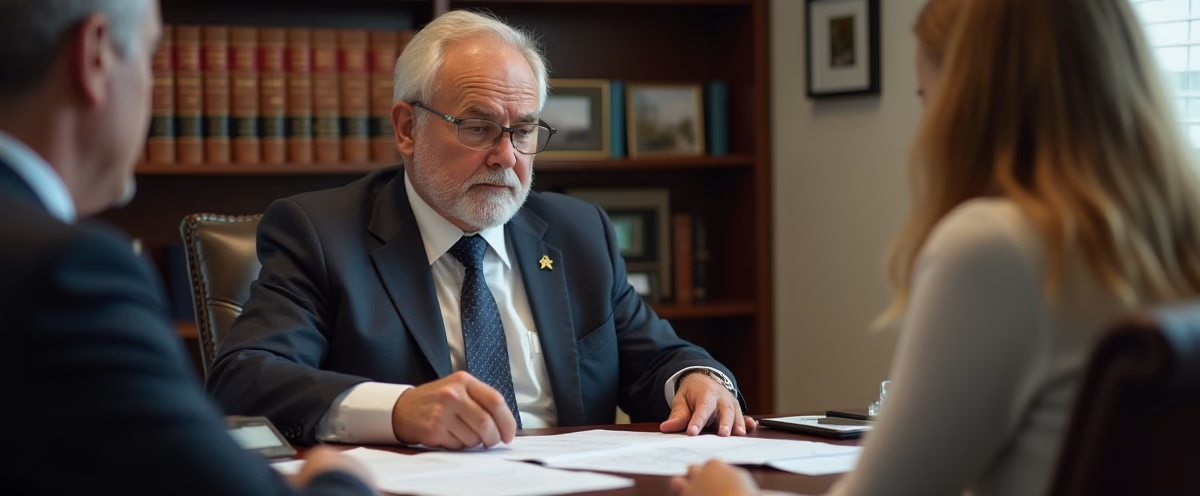
As an estate planning attorney and CPA with over 35 years of experience here in Moreno Valley, I’ve seen firsthand how a simple form like the Receipt of Distribution can prevent headaches and potential legal issues down the line. The form serves as proof that beneficiaries received their designated inheritance. It’s a vital piece of evidence for the executor, confirming they’ve fulfilled their duty to distribute assets according to the will or trust. Without it, an executor can be held liable if a beneficiary later claims they didn’t receive their share. Think of it as a ‘deliverable receipt’ for estate assets.
What Information is Included on the Form?
The Receipt of Distribution form, typically Judicial Council Form DE-205, requires specific information. Key details include: the name of the deceased, the case name and probate number, the beneficiary’s name and address, a detailed description of the distributed assets (including specific amounts of cash, property addresses, stock certificates, etc.), the date of distribution, and – most importantly – a signed statement by the beneficiary acknowledging receipt of those assets. The executor also signs the form, confirming they made the distribution. It’s crucial to be precise when describing the assets. “Cash” isn’t sufficient; specify the exact amount. “Stock” needs to identify the company and number of shares.
How Does This Relate to My Duties as Executor?
As executor, you’re legally responsible for administering the estate and distributing assets appropriately. The Receipt of Distribution isn’t just about ticking a box; it’s about protecting yourself from future claims. Remember that Probate Code § 10800 states fees are calculated on the gross value of the estate, so maintaining accurate records is essential, even regarding distributed assets. A properly executed Receipt of Distribution provides that accuracy and serves as strong evidence for accounting purposes.
What if a Beneficiary Refuses to Sign?
This is where things can get tricky. If a beneficiary refuses to sign, you can’t force them, but you can take steps to protect yourself. First, document all attempts to obtain the signature – send certified mail, make phone calls, keep records of all communications. Second, you can seek a court order to deposit the beneficiary’s share with the court as a protected deposit. This effectively acknowledges your attempt to distribute the assets and shields you from liability. The court then becomes responsible for ensuring the beneficiary receives their funds.
How Does a CPA’s Knowledge Help with Distributions?
My dual background as an attorney and CPA provides unique advantages in these situations. Understanding the tax implications of distributions is critical. For example, the step-up in basis that occurs upon death can significantly impact capital gains taxes for beneficiaries. Knowing how to properly value assets—real estate, business interests, and even collectibles—ensures accurate accounting and minimizes potential tax liabilities. A seemingly simple distribution can have long-term tax consequences if not handled correctly.
What Happens After I Collect All the Receipts?
After you’ve obtained signed Receipts of Distribution from all beneficiaries, you include them with your final accounting. As I always advise, preparing a formal accounting is expensive and time-consuming. If all beneficiaries are adults and agree, they can sign a Waiver of Account (Probate Code § 10954), which significantly speeds up the closing process and saves the estate money. But the Receipts of Distribution still provide essential support for the waiver. Once the court approves the accounting (or the Waiver of Account is accepted), you can file for final discharge.
What is the Final Step in the Process?
The probate case isn’t actually ‘closed’ until the judge signs the Decree of Final Discharge. This document releases the executor from liability. Without it, the executor remains on the hook for the estate indefinitely. Before submitting your petition for final discharge (using Judicial Council Form DE-295), ensure you’ve accounted for the Closing Reserve – a cash reserve (typically $2,000–$5,000) to cover final closing costs and tax preparation. You’ll need receipts demonstrating how the reserve was used, and any remaining funds are distributed to beneficiaries.
What failures trigger contested proceedings and court intervention in California probate administration?
The path through California probate is rarely a straight line; it requires precise adherence to statutory deadlines, accurate asset characterization, and strict fiduciary compliance. Without a clear roadmap, what begins as a standard administrative proceeding can quickly dissolve into a costly battle over interpretation, valuation, and beneficiary rights.
California probate is most manageable when authority is documented early, assets are classified correctly, and procedure is followed consistently from petition through closing. When the process is approached with realistic expectations about notice, claims, accounting, and dispute risk, the estate is more likely to move toward closure without avoidable conflict or delay.
Verified Authority on Closing a California Estate
-
Petition for Final Distribution: California Probate Code § 11600
This is the “finish line” document. It tells the court what bills have been paid, what assets remain, and exactly who gets what according to the Will or intestacy laws. The court must approve this petition before a single dollar is distributed to heirs. -
Waiver of Account: California Probate Code § 10954 (Waiver)
A powerful tool for speeding up the closing process. If all beneficiaries are competent adults and agree in writing, the executor can skip the detailed (and costly) formal financial accounting. This often saves the estate thousands of dollars in legal and accounting fees. -
Executor & Attorney Fees: California Probate Code § 10810 (Attorney Compensation)
Just like the executor, the probate attorney is entitled to statutory fees set by law, not by hourly billing. These fees are requested in the final petition and are paid only after the judge signs the final order. -
Receipt on Distribution: California Probate Code § 11751
Proof is required. After the judge orders distribution, the executor must deliver the assets and obtain a signed Receipt of Distribution from every beneficiary. These receipts must be filed with the court to prove the judge’s order was followed. -
Final Discharge: Judicial Council Form DE-295 (Ex Parte Petition for Final Discharge)
The final step often forgotten. Once all receipts are filed, the executor must file this form to be “discharged.” This order formally relieves the executor of their duties and cancels the bond, ending their legal liability. -
Tax Clearance: Franchise Tax Board (Estates & Trusts)
Before closing, the executor must ensure all personal income taxes of the decedent and fiduciary income taxes of the estate are paid. While a formal tax clearance certificate is not always required for smaller estates, personal liability for unpaid taxes remains a risk for the executor.
|
Attorney Advertising, Legal Disclosure & Authorship
ATTORNEY ADVERTISING.
This content is provided for general informational and educational purposes only and does not constitute legal, financial, or tax advice. Under the California Rules of Professional Conduct and State Bar advertising regulations, this material may be considered attorney advertising. Reading this content does not create an attorney-client relationship or any professional advisory relationship. Laws vary by jurisdiction and are subject to change, including recent 2026 developments under California’s AB 2016 and evolving federal estate and reporting requirements. You should consult a qualified attorney or advisor regarding your specific circumstances before taking action.
Responsible Attorney:
Steven F. Bliss, California Attorney (Bar No. 147856).
Local Office:
Moreno Valley Probate Law23328 Olive Wood Plaza Dr suite h Moreno Valley, CA 92553 (951) 363-4949
Moreno Valley Probate Law is a practice location and trade name used by Steven F. Bliss, Esq., a California-licensed attorney.
About the Author & Legal Review Process
This article was researched and drafted by the Legal Editorial Team of the Law Firm of Steven F. Bliss, Esq.,
a collective of attorneys, legal writers, and paralegals dedicated to translating complex legal concepts into clear, accurate guidance.
Legal Review:
This content was reviewed and approved by Steven F. Bliss, a California-licensed attorney (Bar No. 147856). Mr. Bliss concentrates his practice in estate planning and estate administration, advising clients on proactive planning strategies and representing fiduciaries in probate and trust administration proceedings when formal court involvement becomes necessary.
With more than 35 years of experience in California estate planning and estate administration,
Mr. Bliss focuses on structuring enforceable estate plans, guiding fiduciaries through court-supervised proceedings, resolving creditor and notice issues, and coordinating asset management to support compliant, timely distributions and reduce fiduciary risk. |