|
Legal & Tax Disclosure
ATTORNEY ADVERTISING.
This article is provided for general informational purposes only and does not constitute legal, financial, or tax advice. Reading this content does not create an attorney-client or professional advisory relationship. Laws vary by jurisdiction and are subject to change. You should consult a qualified professional regarding your specific circumstances. |
Darryl came to me in a panic. His brother, recently deceased, had taken out a predatory loan secured by their childhood home. Darryl, as the executor, needed to stop the foreclosure immediately, or he and his sister would be left with nothing. He’d heard you could just go to court and “make them stop it,” but the reality is far more complex. Simply rushing to the courthouse won’t work; California probate demands strict adherence to notice requirements even in emergencies.
As an estate planning attorney and CPA with over 35 years of experience, I’ve handled countless probate cases in Riverside County. One of the most misunderstood procedures is the ex parte hearing. It’s tempting to think of it as a quick fix, but it’s a very specific tool with limited application. It’s crucial to understand the rules, or you risk having your request denied and facing substantial delays.
What constitutes a true Probate Emergency?
The term “emergency” has a precise legal meaning in this context. It’s not enough to simply be inconvenienced or want a faster outcome. California Rule of Court 3.1203 dictates that ex parte relief is generally reserved for situations involving “irreparable harm.” This means the potential damage must be imminent and cannot be adequately compensated by money damages.
Foreclosure is often cited as an emergency, but even then, it requires demonstrating that the executor has diligently pursued all other options. This includes documenting attempts to negotiate with the lender, securing appraisals to assess the property’s value, and preparing a full accounting of the estate’s assets. Simply saying “I don’t want to lose the house” won’t suffice.
What Notice is Required Before an Ex Parte Hearing?
This is where most people stumble. The rules are very clear: you cannot just walk into court for an emergency. Typically, you must give notice to all interested parties by 10:00 AM the court day before the scheduled appearance. This notice must be specific, detailing the relief you are seeking and the reasons why it’s considered an emergency.
Proper notice includes serving a copy of your application, supporting declarations, and any relevant exhibits on all heirs, beneficiaries, and creditors of the estate. I’ve seen cases dismissed simply because the notice was served improperly, resulting in weeks of delay and added expense.
What types of Orders are commonly requested Ex Parte?
While the scope is limited, certain orders are frequently sought on an ex parte basis:
- Temporary Restraining Order (TRO) to Prevent Waste: This is common when a beneficiary is actively damaging or mismanaging estate assets.
- Order Authorizing Immediate Sale of Assets: This might be granted to pay for urgent medical bills or to prevent the loss of a perishable asset.
- Order for Funds for Estate Expenses: Securing funds to pay for appraisals, attorney’s fees, or other essential estate costs.
- Order to Secure Assets: Protecting estate property from theft or unauthorized removal.
What happens if the Court Denies my Ex Parte Application?
If the judge finds that the requirements for an ex parte order are not met, your application will be denied. You are then left with the standard probate procedures, which involve filing a formal motion with proper notice and a full hearing.
However, a denied ex parte application is not necessarily a dead end. It provides an opportunity to address the deficiencies identified by the court and prepare a more comprehensive motion for a subsequent hearing. As a CPA, I can provide detailed valuations and asset summaries that strengthen your case and demonstrate the necessity of the requested relief. The step-up in basis, the capital gains implications, and proper asset allocation are all vital arguments that require expert financial insight.
What determines whether a California probate estate closes smoothly or turns into litigation?
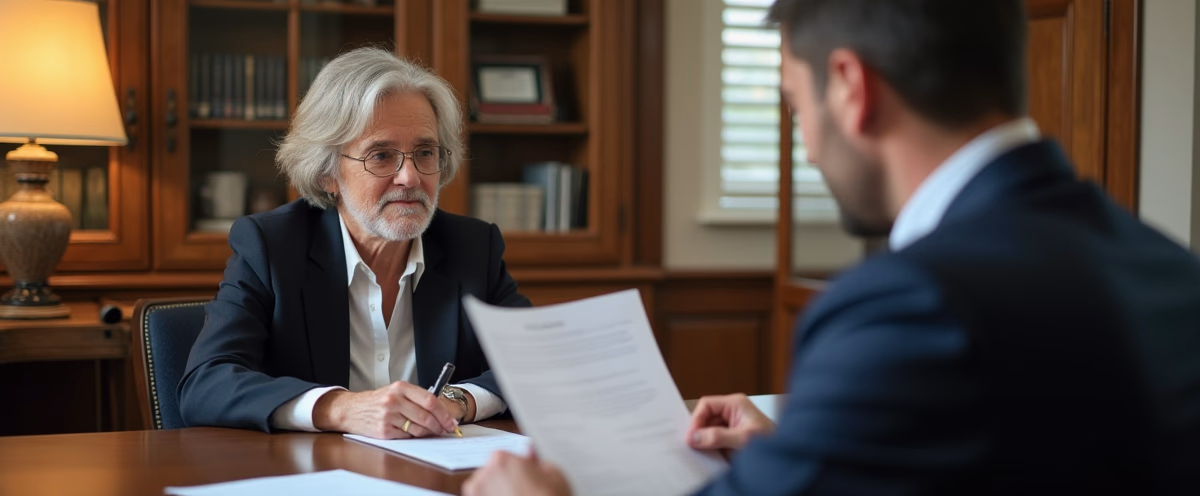
Success in probate court depends less on the size of the estate and more on the accuracy of the petition and the behavior of the fiduciary. Whether the issue is a forgotten asset, a contested creditor claim, or a disagreement among siblings, understanding the procedural triggers for court intervention is the best defense against prolonged administration.
To close an estate cleanly, you must understand the requirements for closing the estate, prepare a detailed estate accounting requirements, and ensure the plan for distributing estate assets is court-approved.
California probate is most manageable when authority is documented early, assets are classified correctly, and procedure is followed consistently from petition through closing. When the process is approached with realistic expectations about notice, claims, accounting, and dispute risk, the estate is more likely to move toward closure without avoidable conflict or delay.
Verified Authority on California Probate Court Operations
-
Jurisdiction & Venue: California Probate Code § 7051 (Domicile Rule)
This statute dictates strictly where the probate case must be heard. It is based on the decedent’s “domicile” (permanent legal residence), not where they died or where their property is located. Filing in the wrong county will result in the case being transferred or dismissed. -
The “850 Petition” (Title Disputes): California Probate Code § 850 (Heggstad/Title)
The Probate Court is not just for processing paperwork; it is a trial court that can determine property ownership. A Section 850 petition allows the judge to order property returned to the estate (from a thief) or transferred out of the estate (to a rightful owner) without a separate civil lawsuit. -
Oral Objections & Continuances: California Probate Code § 1043
You have a right to be heard. This code allows any interested person to appear at the hearing and object orally. The court may grant a continuance to allow you time to file a written objection. This is a critical tool for beneficiaries who find out about a hearing at the last minute. -
Appeals (What Orders are Final?): California Probate Code § 1300 (Appealable Orders)
Not every decision by a probate judge can be appealed immediately. This section lists exactly which orders are “appealable” (e.g., directing distribution, determining heirship). Understanding this list is vital for litigation strategy. -
Tentative Rulings: California Rules of Court 3.1308
In modern California probate practice, the “hearing” often happens on paper before the actual court date. This rule governs the Tentative Ruling system. Checking the tentative ruling the day before is mandatory practice; if you don’t contest it properly, the judge’s tentative decision becomes final. -
Fee Waivers: California Government Code § 68633
Probate filing fees are high (often $435+ per petition). This code authorizes the court to waive these fees for petitioners who are low-income or receiving public benefits, ensuring that access to the probate court is not limited only to the wealthy.
|
Attorney Advertising, Legal Disclosure & Authorship
ATTORNEY ADVERTISING.
This content is provided for general informational and educational purposes only and does not constitute legal, financial, or tax advice. Under the California Rules of Professional Conduct and State Bar advertising regulations, this material may be considered attorney advertising. Reading this content does not create an attorney-client relationship or any professional advisory relationship. Laws vary by jurisdiction and are subject to change, including recent 2026 developments under California’s AB 2016 and evolving federal estate and reporting requirements. You should consult a qualified attorney or advisor regarding your specific circumstances before taking action.
Responsible Attorney:
Steven F. Bliss, California Attorney (Bar No. 147856).
Local Office:
Moreno Valley Probate Law23328 Olive Wood Plaza Dr suite h Moreno Valley, CA 92553 (951) 363-4949
Moreno Valley Probate Law is a practice location and trade name used by Steven F. Bliss, Esq., a California-licensed attorney.
About the Author & Legal Review Process
This article was researched and drafted by the Legal Editorial Team of the Law Firm of Steven F. Bliss, Esq.,
a collective of attorneys, legal writers, and paralegals dedicated to translating complex legal concepts into clear, accurate guidance.
Legal Review:
This content was reviewed and approved by Steven F. Bliss, a California-licensed attorney (Bar No. 147856). Mr. Bliss concentrates his practice in estate planning and estate administration, advising clients on proactive planning strategies and representing fiduciaries in probate and trust administration proceedings when formal court involvement becomes necessary.
With more than 35 years of experience in California estate planning and estate administration,
Mr. Bliss focuses on structuring enforceable estate plans, guiding fiduciaries through court-supervised proceedings, resolving creditor and notice issues, and coordinating asset management to support compliant, timely distributions and reduce fiduciary risk. |