|
Legal & Tax Disclosure
ATTORNEY ADVERTISING.
This article is provided for general informational purposes only and does not constitute legal, financial, or tax advice. Reading this content does not create an attorney-client or professional advisory relationship. Laws vary by jurisdiction and are subject to change. You should consult a qualified professional regarding your specific circumstances. |
I had a client, Emily, call me in a panic last week. She’d been aggressively pursuing debt settlement, and a creditor representative had just started making what Emily reasonably believed were threats – not direct, illegal ones, but veiled comments about reporting her to credit agencies and starting collection actions immediately. Emily, understandably wanting a record of these interactions, started recording the calls without telling the other party. Big mistake. She’d just spent $3,000 on a new computer for her business, and now faced potential legal exposure, all because she hadn’t understood California’s recording laws.
California is a “two-party consent” state under California Penal Code § 632. This means everyone on the call needs to agree to be recorded. It doesn’t matter if you’re the one being threatened or harassed; a unilateral recording can be a felony, with penalties including fines and jail time. And the recording itself is generally inadmissible as evidence in court. This isn’t just about debt collectors – it applies to any conversation you’re a part of, and the standard is surprisingly strict.
What Happens If You Record a Call Illegally?
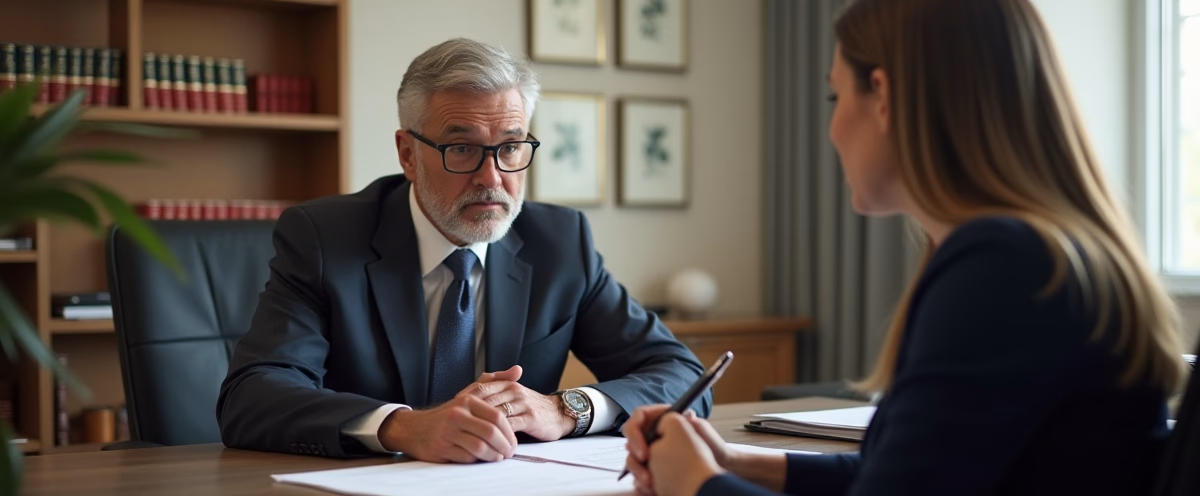
The potential consequences are serious. Under California Penal Code § 632(a), it’s a misdemeanor to record a confidential communication without the consent of all parties involved. This carries a penalty of up to one year in county jail and a $2,500 fine. But it gets worse. If the recording is used as evidence – even if you didn’t intend to use it, but the creditor somehow obtains it – you could face civil liability as well. The creditor could sue you for damages.
How Do You Legally Record a Call in California?
- Consent is Key: You MUST obtain the verbal consent of everyone on the call before you start recording. A simple statement like, “I’d like to record this call for my records; is that okay?” is usually sufficient.
- State the Purpose: Be clear about why you’re recording the call. Simply stating “for my records” is fine, but being more specific can strengthen your position if challenged.
- Document the Consent: Even with verbal consent, it’s best to keep a written record of when and how consent was obtained.
- Notification Requirement: During the call, it’s a good practice to periodically remind all parties that the call is being recorded.
What About Calls From Out of State?
This is where things get tricky. Even if the creditor is located in a state with “one-party consent” laws (meaning only you need to consent to the recording), you’re still bound by California law if you are in California. The location of the caller doesn’t negate your obligations under California Penal Code § 632. It’s always safest to assume California’s rules apply when you are recording conversations within the state.
Protecting Yourself and Your Estate
As an Estate Planning Attorney and CPA with over 35 years of experience, I’ve seen firsthand the devastating consequences of seemingly harmless actions like illegal recordings. My background as a CPA uniquely positions me to understand the financial ramifications of debt settlement, the importance of accurate record-keeping (done legally!), and the potential impact on your estate. For example, if a debt settlement reaches the wrong outcome due to improper evidence gathering, it can affect the step-up in basis on assets, resulting in unnecessary capital gains taxes. Don’t risk your financial future – and potential criminal charges – over a recording. When in doubt, consult with an attorney before recording any conversation.
What causes California probate cases to spiral into delay, disputes, and extra cost?
California probate is designed to provide court-supervised transfer of property, yet cases often break down when authority is unclear, required steps are missed, or disputes arise over assets, notice, and fiduciary conduct. When the process is misunderstood, families can face avoidable delay, escalating conflict, and increased exposure to creditor issues, hearings, or litigation before the estate can close.
To manage the estate’s value, separate property types by learning probate assets, confirm exclusions through assets that bypass probate, and support valuation steps with inventory and appraisal to reduce disagreements about what is in the estate.
California probate is most manageable when authority is documented early, assets are classified correctly, and procedure is followed consistently from petition through closing. When the process is approached with realistic expectations about notice, claims, accounting, and dispute risk, the estate is more likely to move toward closure without avoidable conflict or delay.
Verified Authority on Probate Case Management
-
Mandatory Closing Timeline: California Probate Code § 12200 (Time for Closing)
The clock starts ticking the day Letters are issued. You have 12 months to close the estate (or 18 months if filing a federal tax return). If you miss this deadline, you must file a Status Report of Administration to explain the delay to the judge, or face potential sanctions. -
Notice of Proposed Action (NOPA): California Probate Code § 10580 (IAEA Powers)
This is the executor’s most powerful case management tool. It allows you to sell cars, abandon worthless property, or compromise claims without a court hearing, provided you give beneficiaries 15 days’ notice and receive no written objections. -
Inventory & Appraisal: California Probate Code § 8800 (Filing Deadline)
Effective case management relies on knowing what you have. The law requires the Inventory and Appraisal to be filed within 4 months of appointment. This document lists every asset and its value as of the date of death, serving as the baseline for all accounting. -
Duty to Deposit Money: California Probate Code § 9700 (Estate Funds)
The Personal Representative has a strict fiduciary duty to keep estate cash safe. Funds must be deposited in insured accounts (banks or trust companies authorized in California). Keeping cash in a personal safe or a non-interest-bearing checking account for too long can result in a surcharge. -
Change of Address: California Rules of Court 2.200
A simple but critical management task. If the administrator, executor, or attorney changes their mailing address or email, they must file a Notice of Change of Address (Form MC-040) immediately. The court sends hearing notices by mail; “I didn’t get the letter” is not a valid defense in probate court. -
Duties & Liabilities Form: Judicial Council Form DE-147
Before Letters are issued, every personal representative must sign this form acknowledging they understand their duties. It serves as a permanent record that you were warned about commingling funds, tax deadlines, and the requirement to keep accurate records.
|
Attorney Advertising, Legal Disclosure & Authorship
ATTORNEY ADVERTISING.
This content is provided for general informational and educational purposes only and does not constitute legal, financial, or tax advice. Under the California Rules of Professional Conduct and State Bar advertising regulations, this material may be considered attorney advertising. Reading this content does not create an attorney-client relationship or any professional advisory relationship. Laws vary by jurisdiction and are subject to change, including recent 2026 developments under California’s AB 2016 and evolving federal estate and reporting requirements. You should consult a qualified attorney or advisor regarding your specific circumstances before taking action.
Responsible Attorney:
Steven F. Bliss, California Attorney (Bar No. 147856).
Local Office:
Moreno Valley Probate Law23328 Olive Wood Plaza Dr suite h Moreno Valley, CA 92553 (951) 363-4949
Moreno Valley Probate Law is a practice location and trade name used by Steven F. Bliss, Esq., a California-licensed attorney.
About the Author & Legal Review Process
This article was researched and drafted by the Legal Editorial Team of the Law Firm of Steven F. Bliss, Esq.,
a collective of attorneys, legal writers, and paralegals dedicated to translating complex legal concepts into clear, accurate guidance.
Legal Review:
This content was reviewed and approved by Steven F. Bliss, a California-licensed attorney (Bar No. 147856). Mr. Bliss concentrates his practice in estate planning and estate administration, advising clients on proactive planning strategies and representing fiduciaries in probate and trust administration proceedings when formal court involvement becomes necessary.
With more than 35 years of experience in California estate planning and estate administration,
Mr. Bliss focuses on structuring enforceable estate plans, guiding fiduciaries through court-supervised proceedings, resolving creditor and notice issues, and coordinating asset management to support compliant, timely distributions and reduce fiduciary risk. |