|
Legal & Tax Disclosure
ATTORNEY ADVERTISING.
This article is provided for general informational purposes only and does not constitute legal, financial, or tax advice. Reading this content does not create an attorney-client or professional advisory relationship. Laws vary by jurisdiction and are subject to change. You should consult a qualified professional regarding your specific circumstances. |
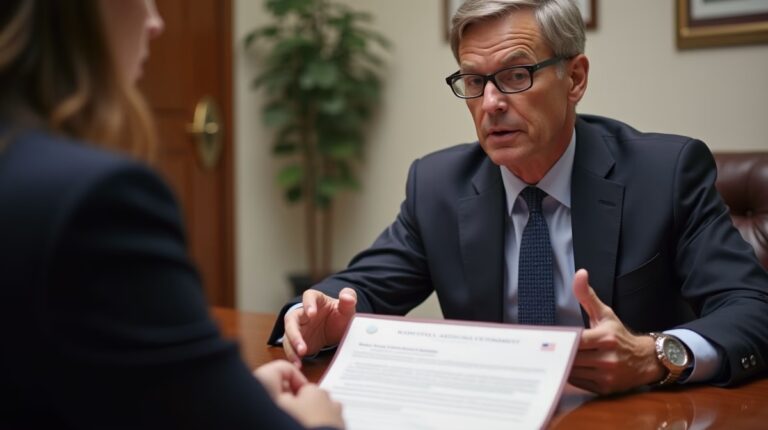
As an estate planning attorney and CPA with over 35 years of experience here in Moreno Valley, I’ve seen this scenario play out far too often. It’s a heartbreaking situation, and unfortunately, it’s one that highlights the critical importance of understanding California probate law. Emily’s initial concern is valid; a challenge to her appointment is possible, but not necessarily successful. The answer lies in the interplay between the Will, California’s statutory priority scheme, and the potential for court intervention.
What Happens When a Will Conflicts with State Law?

A Will allows you to nominate who you want to manage your estate, but it isn’t absolute. California law, specifically Probate Code § 8461, establishes a strict Order of Priority for appointment if there’s a conflict or no Will at all. This order dictates who the court must consider first, even if a Will names someone else. The hierarchy is as follows: (1) Surviving Spouse, (2) Children, (3) Grandchildren, (4) Parents, (5) Siblings. A friend or unmarried partner has zero priority unless specifically named in a valid Will.
In Emily’s case, Mac’s mother is attempting to circumvent his expressed wishes. While Mac nominated Emily in his Will, the mother’s claim puts her in direct competition, as she is also a priority heir. The court will weigh several factors when deciding who ultimately serves as executor.
How Does the Court Decide Between Competing Petitioners?
The court isn’t simply going to automatically appoint the person highest on the priority list. It will consider several factors. First, the court will look at the qualifications of each petitioner. Does Emily have the organizational skills and financial acumen to manage the estate effectively? Does the mother? While not a formal requirement, demonstrating competence is crucial.
Secondly, the court will consider the wishes of the deceased – in this case, Mac’s clear statement in his Will naming Emily. This carries significant weight, although it’s not controlling. The court recognizes that a person’s final instructions deserve consideration. However, if the mother can demonstrate that Emily is demonstrably unfit to serve (e.g., due to a criminal record, history of financial mismanagement, or ongoing conflict with beneficiaries), the court may appoint her instead.
Can Emily Proactively Prevent a Challenge?
While Emily is now reacting to a challenge, she could have taken steps in the estate plan to minimize the risk. A “pour-over” Will coupled with a fully funded revocable living trust provides a strong layer of protection. In this structure, the trust holds the majority of the assets, and the Will simply directs any remaining assets into the trust. The trustee named in the trust (which could be Emily) continues to administer the estate according to the trust terms, bypassing probate court entirely. This significantly reduces the opportunity for challenges.
The CPA Advantage: Navigating Step-Up in Basis & Valuation
As a CPA as well as an attorney, I bring a unique perspective to estate administration. A crucial aspect of being executor is accurately valuing assets for tax purposes, and securing the “step-up in basis.” This means the beneficiaries inherit the assets at their fair market value on the date of death, potentially avoiding significant capital gains taxes when they eventually sell those assets. Proper valuation is essential, and my accounting background allows me to navigate these complexities efficiently. Ignoring this can lead to unnecessary tax liabilities and potential penalties.
What About Bond Requirements?
Finally, let’s address the issue of bond. Probate Code § 8481 dictates whether a bond is required to protect the estate from mismanagement. If a Will waives bond, the court generally respects that waiver. However, if the executor lives out of state, the court can still require a bond. Importantly, if there is no Will (intestacy), bond is almost always required unless all beneficiaries explicitly waive it in writing. The amount of the bond is based on the value of personal property and projected annual income.
Emily should immediately consult with a probate attorney to assess her legal options, gather evidence supporting her qualifications, and prepare for a potential court hearing. A swift and strategic response will significantly improve her chances of being appointed executor and honoring her husband’s wishes.
What causes California probate cases to spiral into delay, disputes, and extra cost?
Success in probate court depends less on the size of the estate and more on the accuracy of the petition and the behavior of the fiduciary. Whether the issue is a forgotten asset, a contested creditor claim, or a disagreement among siblings, understanding the procedural triggers for court intervention is the best defense against prolonged administration.
- Escalation: Prepare for litigating probate disputes if agreement fails.
- Document Challenges: Understand the grounds for contesting a will.
- Cross-Over: Navigate complex probate and trust disputes.
Ultimately, the difference between a routine distribution and a protracted legal battle often comes down to preparation. By anticipating the demands of the Probate Code and addressing potential friction points with beneficiaries and creditors upfront, fiduciaries can navigate the system with greater confidence and lower liability.
Verified Authority on the Petition for Probate
-
The Petition (Form DE-111): California Probate Code § 8000 (Grounds for Filing)
This is the document that starts it all. Under Section 8000, any interested person may file this petition to request the court admit a will to probate and appoint a personal representative. Without this filing, the court has no jurisdiction to act. -
Duty to File the Will: California Probate Code § 8200 (Custodian Duty)
Holding onto the original Will is a liability. The law requires the custodian to deliver the Will to the Superior Court Clerk within 30 days of the death. Hiding or destroying a Will to prevent probate is a serious legal violation. -
Priority for Appointment: California Probate Code § 8461 (Intestacy Hierarchy)
When there is no Will, the court does not choose the “best” person; it follows a rigid statutory list. The Surviving Spouse has top priority, followed by children, then grandchildren. Understanding this hierarchy helps predict who will win a contested appointment. -
Probate Bond Requirements: California Probate Code § 8482 (Bond Amount)
The bond acts as an insurance policy to protect beneficiaries from a dishonest executor. The petition must state the estimated value of the estate so the judge can set the bond amount—typically the value of personal property plus one year’s estimated income. -
Independent Administration (IAEA): California Probate Code § 10400
The box you check here matters. Requesting “Full Authority” under the IAEA allows the executor to manage the estate efficiently (e.g., selling a house) without constant court hearings. Requesting “Limited Authority” forces the estate into a slower, court-supervised process. -
Proving a Lost Will: California Probate Code § 8223
If the original Will cannot be found, the law presumes the decedent destroyed it with the intent to revoke it. To overcome this presumption, the petitioner must provide clear and convincing evidence that the Will was merely lost, not revoked.
|
Attorney Advertising, Legal Disclosure & Authorship
ATTORNEY ADVERTISING.
This content is provided for general informational and educational purposes only and does not constitute legal, financial, or tax advice. Under the California Rules of Professional Conduct and State Bar advertising regulations, this material may be considered attorney advertising. Reading this content does not create an attorney-client relationship or any professional advisory relationship. Laws vary by jurisdiction and are subject to change, including recent 2026 developments under California’s AB 2016 and evolving federal estate and reporting requirements. You should consult a qualified attorney or advisor regarding your specific circumstances before taking action.
Responsible Attorney:
Steven F. Bliss, California Attorney (Bar No. 147856).
Local Office:
Moreno Valley Probate Law23328 Olive Wood Plaza Dr suite h Moreno Valley, CA 92553 (951) 363-4949
Moreno Valley Probate Law is a practice location and trade name used by Steven F. Bliss, Esq., a California-licensed attorney.
About the Author & Legal Review Process
This article was researched and drafted by the Legal Editorial Team of the Law Firm of Steven F. Bliss, Esq.,
a collective of attorneys, legal writers, and paralegals dedicated to translating complex legal concepts into clear, accurate guidance.
Legal Review:
This content was reviewed and approved by Steven F. Bliss, a California-licensed attorney (Bar No. 147856). Mr. Bliss concentrates his practice in estate planning and estate administration, advising clients on proactive planning strategies and representing fiduciaries in probate and trust administration proceedings when formal court involvement becomes necessary.
With more than 35 years of experience in California estate planning and estate administration,
Mr. Bliss focuses on structuring enforceable estate plans, guiding fiduciaries through court-supervised proceedings, resolving creditor and notice issues, and coordinating asset management to support compliant, timely distributions and reduce fiduciary risk. |