|
Legal & Tax Disclosure
ATTORNEY ADVERTISING.
This article is provided for general informational purposes only and does not constitute legal, financial, or tax advice. Reading this content does not create an attorney-client or professional advisory relationship. Laws vary by jurisdiction and are subject to change. You should consult a qualified professional regarding your specific circumstances. |
Emily was devastated. Her mother, Patricia, had always promised Emily would inherit the family home. But when Patricia passed, Emily’s new step-father, George, had convinced Patricia to rewrite her will, cutting Emily out entirely. Emily was certain George had manipulated Patricia, especially given Patricia’s declining health. She challenged the will, but George preemptively raised a “No-Contest” clause, claiming Emily forfeited her right to any inheritance simply for questioning the document. Emily faced losing everything, plus potentially hefty legal fees. This is a surprisingly common situation, and the enforceability of these clauses depends heavily on California law.
Will a No-Contest Clause Automatically Stop a Challenge?
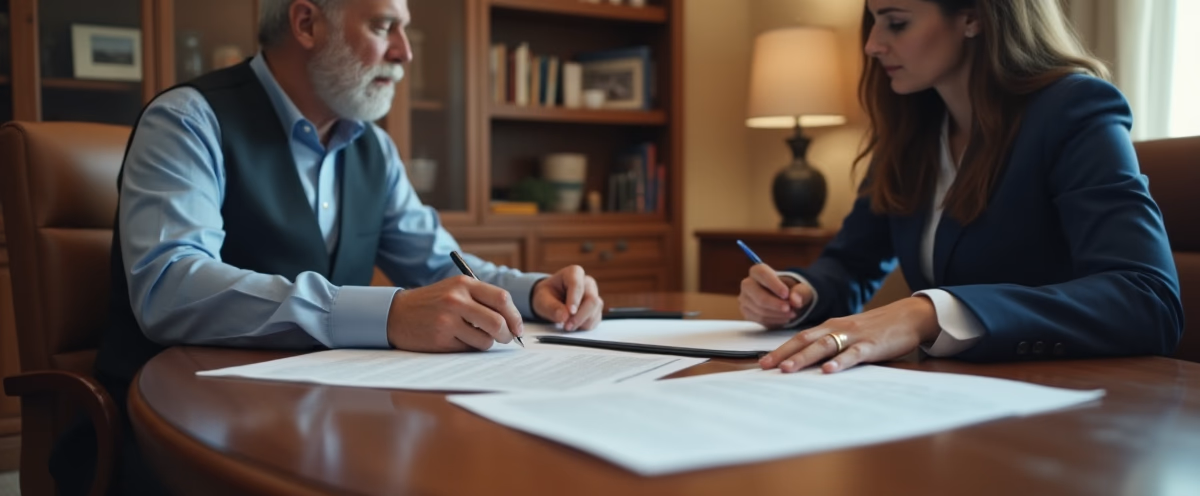
Not necessarily. California’s law regarding “No-Contest” clauses, officially called “in terrorem” clauses, isn’t as straightforward as people believe. They are designed to discourage frivolous lawsuits by threatening disinheritance, but they aren’t a complete shield against legitimate challenges. The critical element is whether the beneficiary has “probable cause” to contest the will.
What constitutes “probable cause”? It’s a surprisingly low bar. It doesn’t mean you will win the case, but it means you have enough evidence to justify a reasonable investigation. Strong evidence of forgery, undue influence, or lack of testamentary capacity are all examples of probable cause. In Emily’s case, evidence of George isolating Patricia from her friends and family, coupled with Patricia’s cognitive decline, could establish probable cause. If the court agrees Emily had probable cause, the No-Contest clause is unenforceable, and she can proceed with her challenge without risking her inheritance.
What Happens if Someone Contests a Will Without Probable Cause?
If you challenge a will without a reasonable basis, and the will ultimately prevails, the No-Contest clause will likely be enforced. This means you lose any inheritance you were slated to receive under the challenged will. However, it’s not always a simple forfeiture. California courts often require a clear demonstration that the contest was brought in “bad faith” or was entirely frivolous. A poorly researched claim might be enough to trigger enforcement, but a good faith challenge based on genuine concerns is less likely to be penalized.
Can a Caregiver Contest a Will and Keep Their Gift?
This is where things get particularly tricky. If the person who benefits from the disinheritance is also the caregiver of the deceased, the law shifts dramatically in their favor. Probate Code § 21380 creates a presumption of undue influence if a gift is made to a caregiver. The burden of proof then falls on the caregiver to prove they didn’t coerce the senior. This is a difficult burden to meet. Evidence of independent medical evaluations, clear documentation of the senior’s wishes, and a lack of isolation are all crucial in defending against a challenge. In these situations, a caregiver needs to be meticulous in their record-keeping and prepared to demonstrate they acted with complete transparency.
What If the Will Was Forged or Fraudulently Induced?
While a No-Contest clause can deter challenges, it doesn’t protect against outright fraud. California law distinguishes between Execution Fraud (forging a signature) and Inducement Fraud (lying to the testator to influence their decision). Proving a signature is fake often requires a forensic handwriting expert, whereas proving fraud in the inducement requires evidence that the testator relied on a lie (e.g., “your son is stealing from you”) to change their estate plan. A No-Contest clause cannot shield a beneficiary from a successful claim of either type of fraud. However, it’s vital to understand that demonstrating either is fact-intensive and requires substantial evidence.
What if I Just Think the Will is Unfair?
Unfortunately, simply believing a will is unfair isn’t enough to contest it. You must be an ‘interested person’—meaning you would financially benefit if the current will is overturned (e.g., a child disinherited by a new will, or a beneficiary named in a previous version). Even as an interested person, you need more than just a feeling of injustice. You need evidence of forgery, undue influence, lack of capacity, or fraud. Otherwise, your challenge is likely to fail, and you could trigger the No-Contest clause.
With over 35 years of experience as both an Estate Planning Attorney and a Certified Public Accountant, I’ve seen firsthand how easily estate plans can be challenged. As a CPA, I understand the intricacies of step-up in basis and capital gains implications – factors often overlooked that can significantly increase the value at stake in a will contest. It’s crucial to have an attorney who understands both the legal and tax ramifications of your decision. If you’re facing a disinheritance, don’t hesitate to seek legal counsel to protect your rights.
What separates an efficient California probate process from a drawn-out conflict over authority and assets?
California probate is designed to provide court-supervised transfer of property, yet cases often break down when authority is unclear, required steps are missed, or disputes arise over assets, notice, and fiduciary conduct. When the process is misunderstood, families can face avoidable delay, escalating conflict, and increased exposure to creditor issues, hearings, or litigation before the estate can close.
Ultimately, the difference between a routine distribution and a protracted legal battle often comes down to preparation. By anticipating the demands of the Probate Code and addressing potential friction points with beneficiaries and creditors upfront, fiduciaries can navigate the system with greater confidence and lower liability.
Verified Authority on California Will Contests
-
The 120-Day Statute of Limitations: California Probate Code § 8270
Time is the enemy in a will contest. Under Section 8270, an interested person may petition the court to revoke the probate of a will, but this petition MUST be filed within 120 days after the will is admitted. Missing this deadline is usually fatal to the case. -
Mental Competency Standard: California Probate Code § 6100.5 (Unsound Mind)
This statute defines exactly what “mental incompetency” means in probate. It is not just general forgetfulness; the contestant must prove the deceased did not understand the nature of the testamentary act, could not recollect their property, or was suffering from a specific hallucination or delusion that dictated the will’s terms. -
Presumption of Undue Influence (Caregivers): California Probate Code § 21380
To protect vulnerable seniors, California law automatically presumes undue influence if a will leaves assets to a paid care custodian or the lawyer who drafted the instrument. This shifts the heavy burden of proof onto the accused to prove their innocence. -
No-Contest Clause Enforceability: California Probate Code § 21311
Many wills contain threats to disinherit anyone who challenges them. This statute limits the power of those clauses. A beneficiary cannot be penalized for a contest if the court finds they had “probable cause” to file the lawsuit. -
Standing to Contest: California Probate Code § 48 (Interested Person)
Not everyone can sue. To contest a will, you must qualify as an “interested person”—typically an heir who would inherit under intestate succession (if there were no will) or a beneficiary named in a prior valid will. -
Financial Elder Abuse Remedies: California Probate Code § 859 (Double Damages)
Will contests often overlap with elder abuse claims. If the court finds that a person used undue influence, fraud, or bad faith to take assets (or change a will) to the detriment of the estate, they can be liable for twice the value of the property taken, plus attorney fees.
|
Attorney Advertising, Legal Disclosure & Authorship
ATTORNEY ADVERTISING.
This content is provided for general informational and educational purposes only and does not constitute legal, financial, or tax advice. Under the California Rules of Professional Conduct and State Bar advertising regulations, this material may be considered attorney advertising. Reading this content does not create an attorney-client relationship or any professional advisory relationship. Laws vary by jurisdiction and are subject to change, including recent 2026 developments under California’s AB 2016 and evolving federal estate and reporting requirements. You should consult a qualified attorney or advisor regarding your specific circumstances before taking action.
Responsible Attorney:
Steven F. Bliss, California Attorney (Bar No. 147856).
Local Office:
Moreno Valley Probate Law23328 Olive Wood Plaza Dr suite h Moreno Valley, CA 92553 (951) 363-4949
Moreno Valley Probate Law is a practice location and trade name used by Steven F. Bliss, Esq., a California-licensed attorney.
About the Author & Legal Review Process
This article was researched and drafted by the Legal Editorial Team of the Law Firm of Steven F. Bliss, Esq.,
a collective of attorneys, legal writers, and paralegals dedicated to translating complex legal concepts into clear, accurate guidance.
Legal Review:
This content was reviewed and approved by Steven F. Bliss, a California-licensed attorney (Bar No. 147856). Mr. Bliss concentrates his practice in estate planning and estate administration, advising clients on proactive planning strategies and representing fiduciaries in probate and trust administration proceedings when formal court involvement becomes necessary.
With more than 35 years of experience in California estate planning and estate administration,
Mr. Bliss focuses on structuring enforceable estate plans, guiding fiduciaries through court-supervised proceedings, resolving creditor and notice issues, and coordinating asset management to support compliant, timely distributions and reduce fiduciary risk. |