
|
Legal & Tax Disclosure
ATTORNEY ADVERTISING.
This article is provided for general informational purposes only and does not constitute legal, financial, or tax advice.
Reading this content does not create an attorney-client or professional advisory relationship.
Laws vary by jurisdiction and are subject to change. You should consult a qualified professional regarding your specific circumstances.
|
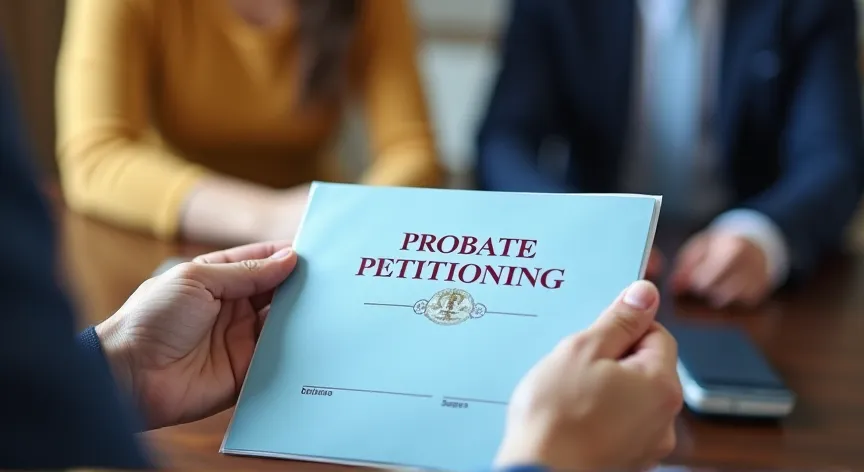
Petitioning for Probate in California.
A probate petition begins a complex process. Learn what to include, who can file, and how smart planning simplifies it to protect your loved ones.
A Family Unprepared for Pain & Probate!
When Laura passed, her children, Ethan and Rachel, discovered no clear estate plan existed. Without a trust or will, every bank account, property deed, and financial record requires probate review. Grief quickly gave way to frustration. Instead of focusing on family healing, they found themselves waiting for court dates, preparing petitions, and fielding creditor claims. A task that could have been orderly became a protracted ordeal.
Free Initial Consultation with
Steven F. Bliss Esq.

★ ★ ★ ★ ★

What Is the Petition for Probate in California?
The Petition for Probate is the legal document filed with the superior court to open a probate case. California Probate Code §8000 authorizes an interested party to file, triggering judicial review. The petition names heirs, identifies the decedent’s property, and requests appointment of an executor or administrator. This filing functions as the gateway; without it, the court cannot assign authority to manage the estate. Like unlocking a vault, the petition provides the court a legal key to access and supervise distribution.
Who May File a Petition for Probate?
Ordinarily, the named executor in a valid will files. Absent a will, heirs can petition under Probate Code §8461, which ranks priority of appointment. Surviving spouses stand first, followed by children, then grandchildren. Notwithstanding a statutory order, courts retain the discretion to appoint a neutral administrator if conflicts arise. Filing rights prevent chaos by creating an orderly hierarchy rather than open competition.
What Information Must Be Included in the Petition?
The petition requires comprehensive detail:
- Death certificate
- Decedent’s address and date of death
- Heirs and beneficiaries
- Estate value, including real and personal property
- Will and codicils, if any
- Bond request, unless waived by law
California Probate Code §8002 prescribes these elements. The petition resembles a detailed blueprint; omissions risk rejection or delay. Probate court findings underscore that missing data often resets timelines, adding months to a proceeding.
What Happens After Filing the Petition?
After filing, the court schedules a hearing, often within 30–45 days. Notice must be served to all interested parties and published in a local newspaper per Probate Code §8120. Creditors and heirs receive a chance to contest. At the hearing, the judge validates the will (if present) and appoints an executor or administrator. The court order then authorizes control of estate assets. This step transitions probate from the filing stage to active administration.
Why Does Probate Require Public Notice?
Public notice ensures transparency. Probate Code §8121 mandates newspaper publication, allowing creditors and unknown heirs to surface. The procedure often frustrates families seeking privacy. Nevertheless, public notice shields against fraud by exposing the process to scrutiny. Like shining a floodlight into a dark corner, publicity ensures hidden liabilities cannot be ignored.
What Are the Costs of Filing and Pursuing Probate?
Filing fees vary by county but often exceed several hundred dollars. More significantly, attorney and executor compensation is set by Probate Code §10810 as a percentage of gross estate value. For example, a $1,000,000 estate incurs statutory fees of roughly $46,000 for the combined services of the attorney and executor. Data-driven insights reveal that these costs often consume 5–7% of estate value, particularly when disputes prolong administration.
When Probate Petitions Go Wrong:
One estate involved three adult children disputing the administration. Competing petitions under Probate Code §8461 led to months of litigation. During delays, creditors pursued judgments, and unpaid property taxes accumulated. By the time resolution occurred, estate value declined by nearly $100,000. Conversely, precise planning could have designated a single executor and avoided costly rivalry.
How Can Proper Planning Streamline Probate Petitions?
A valid will or trust with a nominated executor prevents a contest. From my years of experience, estates with unambiguous instructions advance through hearings with fewer delays. Probate court findings underscore that uncontested petitions generally resolve within 12 months, while contested petitions may last for years. Proper planning functions as a pre-set itinerary, guiding the process forward with fewer diversions.
Does Every Estate Require a Full Petition?
No. Small estates valued under $184,500 qualify for simplified procedures under Probate Code §13100. These affidavits bypass full hearings and administrator appointments. Accordingly, not every estate requires a comprehensive petition. Nevertheless, estates exceeding the threshold or involving real property almost always require formal probate. This distinction creates two tracks: streamlined and comprehensive.
What Data Demonstrates the Urgency of Probate Preparation?
Analysis of recent trends indicates that over 80,000 probate filings occur annually in California (Judicial Council of California, 2023). Probate court findings underscore that thousands of families face contested petitions each year. A related national study reveals that only 32% of Americans reported having a will in 2024 (Caring.com, 2024). Consequently, the majority of families remain vulnerable to intestacy and mandatory probate.
StatisticSource
80,000+ annual probate filings in the California Judicial Council, 2023
32% of Americans have a will, according to Caring.com, 2024
How Can Petitioning Be Done Right?
Contrast Laura’s family with Mac, who executed a trust and updated wills. His executor filed a streamlined petition only for one parcel of real property. Notice proceeded without contest, and the court confirmed authority within weeks. Distribution occurred swiftly, assets transferred cleanly, and creditors were satisfied. Like a carefully rehearsed performance, every element is aligned, ensuring closure instead of chaos. This streamlined process can bring a sense of relief and reassurance to families.
Just Two of Our Awesome
Attorney Advertising, Legal Disclosure & Authorship
ATTORNEY ADVERTISING.
This content is provided for general informational and educational purposes only and does not constitute legal, financial, or tax advice.
Under the California Rules of Professional Conduct and State Bar advertising regulations, this material may be considered attorney advertising.
Reading this content does not create an attorney-client relationship or any professional advisory relationship.
Laws vary by jurisdiction and are subject to change, including recent 2026 developments under California’s AB 2016 and evolving federal estate and reporting requirements.
You should consult a qualified attorney or advisor regarding your specific circumstances before taking action.
Responsible Attorney:
Steven F. Bliss, California Attorney (Bar No. 147856).
Local Office:
Moreno Valley Probate Law
23328 Olive Wood Plaza Dr suite h
Moreno Valley, CA 92553
(951) 363-4949
Moreno Valley Probate Law is a practice location and trade name used by Steven F. Bliss, Esq., a California-licensed attorney.
About the Author & Legal Review Process
This article was researched and drafted by the Legal Editorial Team of the Law Firm of Steven F. Bliss, Esq.,
a collective of attorneys, legal writers, and paralegals dedicated to translating complex legal concepts into clear, accurate guidance.
Legal Review:
This content was reviewed and approved by Steven F. Bliss, a California-licensed attorney (Bar No. 147856).
Mr. Bliss concentrates his practice in estate planning and estate administration, advising clients on proactive planning strategies and representing fiduciaries in probate and trust administration proceedings when formal court involvement becomes necessary.
With more than 35 years of experience in California estate planning and estate administration,
Mr. Bliss focuses on structuring enforceable estate plans, guiding fiduciaries through court-supervised proceedings,
resolving creditor and notice issues, and coordinating asset management to support compliant, timely distributions and reduce fiduciary risk.
Client Reviews:
23328 Olive Wood Plaza Dr suite h
Moreno Valley, CA 92553
(951) 363-4949
Allison:
⭐️⭐️⭐️⭐️⭐️
“When my mother passed, I felt overwhelmed by probate requirements. Steve Bliss guided us through the petition process, ensuring every form and notice was handled. His clarity transformed a daunting task into an organized process that protected family assets.”
Valerie:
⭐️⭐️⭐️⭐️⭐️
“Our family feared probate court delays. Steve Bliss explained petition requirements clearly and navigated hearings without unnecessary conflict. What began as confusion ended in resolution with peace of mind.”
Call Steve Bliss today to prepare or review your estate documents before probate strikes.
Filing a petition does not need to overwhelm heirs or drain estate value. With experience, foresight, and deep knowledge of the California Probate Code, Steve Bliss ensures families sidestep avoidable obstacles. Locally trusted, he provides structure where uncertainty otherwise reigns. Take action now to protect property, reduce disputes, and secure orderly transfer for loved ones. Remember, timely action is key to avoiding probate-related complications.
Citations:
California Probate Code §§8000, §8002, §8120–8121, §8461, §10810, §13100.
Did you find this article helpful? Show your support by giving us a 5-star rating—it only takes a second and helps others find the information they need.