
|
Legal & Tax Disclosure
ATTORNEY ADVERTISING.
This article is provided for general informational purposes only and does not constitute legal, financial, or tax advice.
Reading this content does not create an attorney-client or professional advisory relationship.
Laws vary by jurisdiction and are subject to change. You should consult a qualified professional regarding your specific circumstances.
|
Guide to the California Probate Process.
Dying without a will can harm your family and legacy. Discover how a comprehensive estate plan protects your assets and avoids the pitfalls of probate.
A Family Rift That Triggered Real Risk
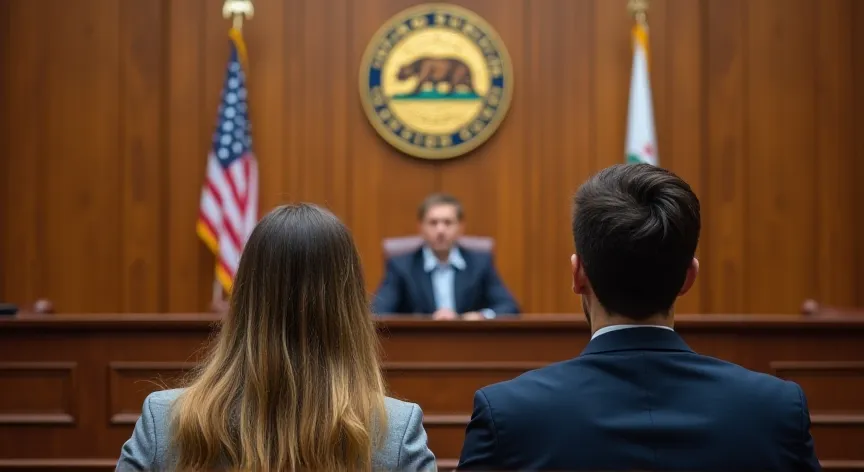
When James passed away unexpectedly, his children, Claire and Daniel, assumed his estate would settle quietly. An informal agreement suggested equal shares—but no will existed. The absence of legal clarity transformed a potential moment of closure into months of legal wrangling. Funds stalled in probate court, creditors surfaced, and relationships frayed. Mourning deteriorated into a procedural conflict. With stakes rising, urgency took root, spotlighting the essential need for clarity in estate planning.
Free Initial Consultation with
Steven F. Bliss Esq.

★ ★ ★ ★ ★

What Defines the California Probate Process?
Probate in California unfolds under Probate Code sections 7000–7361. The superior court oversees asset validation, creditor resolution, and legal distribution of assets. An executor or administrator handles marshaling assets, paying debts, and transferring clear title. The process demands court filings analogous to a ledger—every transfer, inventory, and report must align with statutory precision. Without a legal strategy, heirs face delays, fees, and exposure to procedural pitfalls.
Why Does Probate Drag on in California?
Statutory mandates force delay. Probate Code §12200 requires formal notice to creditors and heirs. Creditors gain four months to assert claims, then distributions begin. Many counties report probate durations exceeding 12 months due to administrative backlog. It resembles a clogged processing line—every estate, regardless of complexity, passes through identical checkpoints.
What Merits Does Probate Offer?
Probate yields clarity and oversight. Court supervision ensures creditor legitimacy and guards against inheritance misallocation. It legitimizes property transfers, granting purchasers confidence. Moreover, oversight deters familial disputes. Probate court findings underscore that structured legal scrutiny curbs fraud and enforces equitable resolution.
What Are the Drawbacks of Probate?
Statutory fees erode value. Under Probate Code §10810, attorney and personal representative fees derive from the gross estate, not net. Even moderate estates may lose thousands. Public filings compromise privacy. Moreover, procedural delays breed frustration. Analysis of recent trends indicates that costs and public exposure often deter families from relying solely on probate.
How Does Dying Without a Will Harm Families?
If a California resident dies intestate, distribution follows Probate Code §§6400–6414. Assets go to spouse, then children, then parents, then siblings. A nonmarital partner receives nothing. A long-term companion may be excluded entirely. Consequently, informal arrangements collapse under statutory logic—intestacy substitutes intent with rigid hierarchies.
When Probate Goes Off the Rails?
A real estate portfolio inherited by three siblings lacked estate direction. Two filed competing petitions; a third challenged accounting methods. Deadlines lapsed; filings omitted. The court required accounting revisions, delaying closure by 18 months. Fees surged, assets devalued. An estate originally worth $800,000 shrank by over $120,000. The result: avoidable attrition and fractured family trust.
How Does Smart Planning Bypass These Hazards?
Proper structuring simplifies matters. Setting up a revocable living trust, naming beneficiaries, and titling property avoids many probate steps. Our firm’s extensive case reviews demonstrate that well-prepared estates settle within nine months—half the duration of disorganized ones. Consequently, heirs preserve estate value and bypass public scrutiny.
Do All Assets Undergo Probate?
No. Payable-on-death accounts, life insurance, jointly held assets, and beneficiary-designated retirement plans bypass probate. Small estates, those valued under $184,500, qualify for streamlined procedures under Probate Code §13100. Yet, mixed asset holdings often trigger partial probate. Families must audit each asset category to avoid unforeseen complications.
How Do Creditors Influence California Probate?
Creditors must be notified per Probate Code §9050. Claims take precedence over distribution. Data-driven insights reveal that a majority of probate cases include at least one creditor claim. Early creditor settlement delays disbursement and may require asset liquidation. Creditors often become de facto beneficiaries of the delay.
What Do Data Show about Estate Planning Behavior?
Data-driven insights reveal that only 32 % of Americans had a will in 2024—a 6 % drop from 2023.
- 40 % of those without a will cited insufficient assets as the reason.
- Young adults aged 18–34 increased their ownership by 50 % since 2020.
Although California-specific data remain sparse, national trends imply similar vulnerability. Probate court findings underscore that a lack of documentation stalls resolution and compounds emotional strain in California estates.
How Has California Raised the Small Estate Limit to $750,000?
California law provides “summary succession” procedures that let heirs transfer assets without going through complete probate, as long as the estate falls within certain limits. Historically, the ceiling for using a Small Estate Affidavit was $166,250 for deaths before April 1, 2022, and $184,500 for deaths on or after that date. However, with the recent passing of Assembly Bill 2016, effective from April 1, 2025, this threshold has been significantly increased to $750,000. This change brings a sense of relief and optimism, as it greatly expands the number of estates eligible to bypass formal probate through this affidavit process.
Can a Primary Residence Now Avoid Probate Under the New Rule?
AB 2016 also creates a simplified procedure for transferring a decedent’s primary residence worth $750,000 or less. Heirs can file a verified petition with the court under Probate Code § 13151 and related sections to avoid the lengthy probate process. This option applies strictly to the primary home in California—other real estate or estates exceeding the cap still require standard probate. The law further ensures that the $750,000 limit will be reviewed and adjusted automatically every three years, with the first scheduled adjustment on April 1, 2028. This regular review provides a sense of security and keeps you informed about the future changes.
How Can Families Prevent Probate Pitfalls?
Implementing planning measures early avoids most probate hazards. Draft a living trust, align beneficiary designations, and maintain asset documentation. Updating plans after life events ensures relevance. As my observations affirm, preparation evolves probate from obstacle to orderly transition, preserving both value and harmony.
Just Two of Our Awesome
Attorney Advertising, Legal Disclosure & Authorship
ATTORNEY ADVERTISING.
This content is provided for general informational and educational purposes only and does not constitute legal, financial, or tax advice.
Under the California Rules of Professional Conduct and State Bar advertising regulations, this material may be considered attorney advertising.
Reading this content does not create an attorney-client relationship or any professional advisory relationship.
Laws vary by jurisdiction and are subject to change, including recent 2026 developments under California’s AB 2016 and evolving federal estate and reporting requirements.
You should consult a qualified attorney or advisor regarding your specific circumstances before taking action.
Responsible Attorney:
Steven F. Bliss, California Attorney (Bar No. 147856).
Local Office:
Moreno Valley Probate Law
23328 Olive Wood Plaza Dr suite h
Moreno Valley, CA 92553
(951) 363-4949
Moreno Valley Probate Law is a practice location and trade name used by Steven F. Bliss, Esq., a California-licensed attorney.
About the Author & Legal Review Process
This article was researched and drafted by the Legal Editorial Team of the Law Firm of Steven F. Bliss, Esq.,
a collective of attorneys, legal writers, and paralegals dedicated to translating complex legal concepts into clear, accurate guidance.
Legal Review:
This content was reviewed and approved by Steven F. Bliss, a California-licensed attorney (Bar No. 147856).
Mr. Bliss concentrates his practice in estate planning and estate administration, advising clients on proactive planning strategies and representing fiduciaries in probate and trust administration proceedings when formal court involvement becomes necessary.
With more than 35 years of experience in California estate planning and estate administration,
Mr. Bliss focuses on structuring enforceable estate plans, guiding fiduciaries through court-supervised proceedings,
resolving creditor and notice issues, and coordinating asset management to support compliant, timely distributions and reduce fiduciary risk.
Client Reviews:
23328 Olive Wood Plaza Dr suite h
Moreno Valley, CA 92553
(951) 363-4949
Brandi:
⭐️⭐️⭐️⭐️⭐️
“Estate planning felt overwhelming after my spouse’s passing. Steve Bliss broke down the process, guiding each step forward. Local kin avoided contention, and probate became a swift tool instead of a burden.”
Emmanuel:
⭐️⭐️⭐️⭐️⭐️
“A legal flux loomed when my father died intestate. Steve Bliss pivoted us toward a trust, titles followed seamlessly, and assets passed quietly. Peace prevailed instead of court conflict.”
Probate need not unravel families or erode inheritance.
Consider working with Steve Bliss—local and attuned to California’s probate system—to structure your estate with foresight. With clear documentation, careful titling, and strategic planning, assets transfer smoothly and privately.
👉 Act now to safeguard your legacy and protect your loved ones from unnecessary legal strain
Citations:
California Probate Code §§7000–7361, §12200, §10810, §§6400–6414, §13100, §9050.
Caring.com’s 2024 Wills and Estate Planning Survey
California Assembly Bill: 2016.
Did you find this article helpful? Show your support by giving us a 5-star rating—it only takes a second and helps others find the information they need.