
|
Legal & Tax Disclosure
ATTORNEY ADVERTISING.
This article is provided for general informational purposes only and does not constitute legal, financial, or tax advice.
Reading this content does not create an attorney-client or professional advisory relationship.
Laws vary by jurisdiction and are subject to change. You should consult a qualified professional regarding your specific circumstances.
|
Your Medical Choices: Take Control With a Directive.
Empower yourself and protect your loved ones from uncertainty. An Advance Health Care Directive is your definitive guide for medical decisions, ensuring your wishes are followed.
What Happens If You Don’t Have an Advance Health Care Directive?
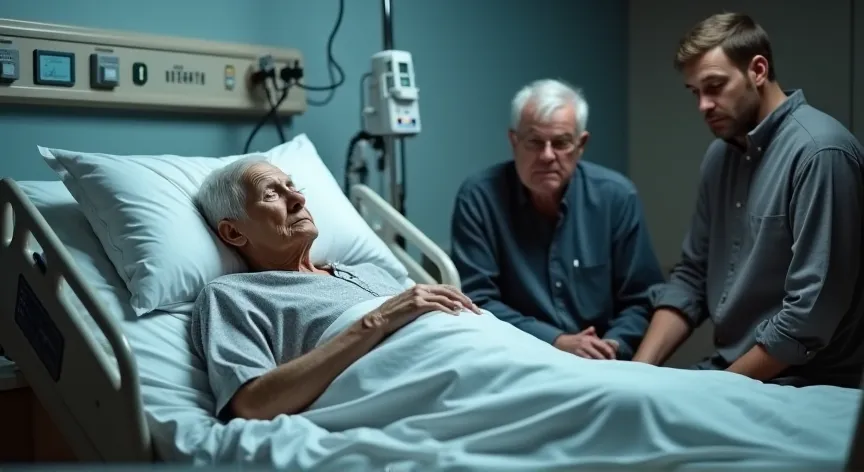
Jenna’s father collapsed during a Sunday barbecue. Paramedics revived him, but upon hospital arrival, his vitals plummeted. No one—neither Jenna, nor the attending physicians—knew whether he’d want to be placed on a ventilator. Her uncle insisted on aggressive treatment; her mother begged for comfort care only. Chaos fractured the family at the worst possible moment. No directive. No clarity. No peace.
Free Initial Consultation with
Steven F. Bliss Esq.

★ ★ ★ ★ ★

What Is an Advance Health Care Directive and Why Is It So Important?
An Advance Health Care Directive (AHCD) outlines instructions for medical treatment preferences and designates someone to speak on behalf of the patient if incapacitated. Under California Probate Code §§ 4600-4806, this legal instrument replaces prior forms like the Durable Power of Attorney for Health Care and Natural Death Act Declaration. Its creation ensures control during life’s most vulnerable junctures. Without it, decision-making defaults to fragmented family voices or risk-averse medical staff.
Like setting coordinates before a storm, AHCDs steer medical care during unconsciousness, coma, or severe dementia. These documents often remain untouched until disaster strikes—yet their absence can spawn crisis-level confusion.
Who Can Create One and What Types of Directives Exist?
Any competent adult can draft an AHCD. This directive typically combines two instruments:
- Power of Attorney for Health Care: Authorizes an agent to make decisions.
- Individual Health Care Instructions: Specifies care preferences (e.g., DNR, palliative care, organ donation).
These components may be executed together or separately. California law permits customized provisions, as long as the form adheres to § 4671. For those with religious convictions, Jehovah’s Witnesses, for instance; tailored directives can exclude blood transfusions or restrict treatments.
Who Should Be Named in an Advance Health Care Directive?
Selection of a health care agent is not a decision to be taken lightly. It demands deliberation. Spouses often serve this role, yet emotional volatility may impair judgment during crises. An adult child, a trusted sibling, or even a long-time friend may act with greater clarity. The directive may designate primary and alternate agents, ensuring continuity if the first becomes unavailable. This decision is crucial, as the right agent can ensure your wishes are followed, and the wrong one can lead to conflict and uncertainty.
Agents assume authority only after incapacity, as determined by attending physicians. Moreover, California permits mental health treatment preferences within AHCDs, which is beneficial for individuals with recurring psychiatric conditions. Think of the agent as the designated pilot when the original captain falls unconscious.
What Legal Formalities Are Required to Execute a Valid Directive?
Execution must follow California’s strict format. Under § 4673, a directive becomes legally valid once signed before two adult witnesses or a notary public. Witnesses cannot be health care providers or named agents. At least one witness must not be related by blood, marriage, or adoption, nor be entitled to any portion of the estate.
From our firm’s extensive case reviews, improperly witnessed forms often derail enforceability. Incomplete forms, missing initials on specific treatment decisions or unsigned agent consent clauses render documents vulnerable under court scrutiny.
How Far Does the Scope of an Advance Health Care Directive Extend?
An AHCD grants authority for a broad spectrum of decisions:
- Life support withdrawal
- Pain management
- Placement in nursing facilities
- Mental health treatment
- Post-death arrangements (including organ donation)
Nevertheless, it cannot override public health mandates or compel illegal actions (e.g., assisted suicide). Agents may also refuse procedures based on known beliefs of the principal even if undocumented, though courts favor written specificity. Like a dimmer switch, clarity in the directive calibrates how much discretion an agent wields.
How Do Faith and Ethics Intersect With Medical Directives?
Religious and moral beliefs frequently influence decisions about artificial life support or feeding tubes. Some individuals demand maximal intervention as sacred duty; others regard prolonged life as indignity. The AHCD permits the inclusion of spiritual guidelines, such as consultation with a clergy member or directives to avoid Sabbath violations.
Conversely, ethical dilemmas arise when surrogates override clearly expressed wishes, citing evolving beliefs or guilt. Probate court findings underscore that such reversals ignite litigation often prolonging suffering. Moral clarity within the directive can insulate the principal’s intent from reinterpretation.
Can an Advance Directive Be Changed After Signing?
Yes, revocation or amendment is always possible. Under § 4695, a principal may revoke verbally or in writing, or by destroying the document. A new directive automatically supersedes prior ones. Changes must reflect in all known copies and be communicated to agents and physicians. Data-driven insights reveal nearly 25% of AHCDs become outdated due to later-diagnosed conditions or shifting family dynamics.
Think of directives like software—periodic updates prevent fatal bugs. When omitted, agents may follow obsolete guidance, or worse, contradict new values.
Is Registration of an Advance Health Care Directive Required?
Registration is not mandated under California law, though encouraged. Optional filing with the Secretary of State’s Advance Health Care Directive Registry ensures hospitals and agents can locate the directive quickly. Registration involves submission of a simple form (SFL 461) and small fee.
Our firm’s observations suggest that even the most carefully crafted directive proves useless when locked in a desk drawer during an emergency. Imagine designing a fire escape plan and taping it inside a closed safe. Accessibility matters.
What Role Does Public Policy Play in Health Care Directives?
California public policy encourages autonomy and minimizes unnecessary interventions. State law favors honoring clear instructions and agent authority over paternalistic medical practices. Conversely, the policy also safeguards against abuse, requiring physicians to document incapacitation and respect specific prohibitions (e.g., agent cannot commit patient to mental institution without explicit consent).
Moreover, culturally sensitive legislation protects patients from coercion, particularly in multilingual households or immigrant families. Accordingly, translated directives are now available in Tagalog, Mandarin, and Spanish to reflect local demographics.
How Do Other Legal Instruments Interact With the Directive?
The AHCD interfaces with:
- HIPAA Authorizations: Allowing agents to access records
- Living Trusts: Coordinating with conservatorship avoidance
- Physician Orders for Life-Sustaining Treatment (POLST): Used in advanced illness stages
Ordinarily, the directive acts as a blueprint, while these tools provide logistical follow-through. Without alignment, contradictory documents may confuse care providers or spawn intra-family disputes.
What Happens When There’s No Directive?
James suffered a severe stroke. No AHCD existed. His ex-wife, still legally next of kin asserted decision-making authority. His long-term partner objected. Physicians defaulted to aggressive intervention. Probate hearings ensued. Time drained while James lingered in a vegetative state. Ultimately, the court appointed a conservator, months too late to influence care decisions.
How Did Having a Directive Save This Family Heartache?
Conversely, Marian had named her sister in an AHCD. When a car accident rendered her unconscious, physicians consulted the directive and followed Marian’s DNR preference. Her sister declined invasive procedures. Care remained compassionate and in alignment with Marian’s deeply held beliefs. The family gathered peacefully, unburdened by conflict or regret.
Just Two of Our Awesome
Attorney Advertising, Legal Disclosure & Authorship
ATTORNEY ADVERTISING.
This content is provided for general informational and educational purposes only and does not constitute legal, financial, or tax advice.
Under the California Rules of Professional Conduct and State Bar advertising regulations, this material may be considered attorney advertising.
Reading this content does not create an attorney-client relationship or any professional advisory relationship.
Laws vary by jurisdiction and are subject to change, including recent 2026 developments under California’s AB 2016 and evolving federal estate and reporting requirements.
You should consult a qualified attorney or advisor regarding your specific circumstances before taking action.
Responsible Attorney:
Steven F. Bliss, California Attorney (Bar No. 147856).
Local Office:
Moreno Valley Probate Law
23328 Olive Wood Plaza Dr suite h
Moreno Valley, CA 92553
(951) 363-4949
Moreno Valley Probate Law is a practice location and trade name used by Steven F. Bliss, Esq., a California-licensed attorney.
About the Author & Legal Review Process
This article was researched and drafted by the Legal Editorial Team of the Law Firm of Steven F. Bliss, Esq.,
a collective of attorneys, legal writers, and paralegals dedicated to translating complex legal concepts into clear, accurate guidance.
Legal Review:
This content was reviewed and approved by Steven F. Bliss, a California-licensed attorney (Bar No. 147856).
Mr. Bliss concentrates his practice in estate planning and estate administration, advising clients on proactive planning strategies and representing fiduciaries in probate and trust administration proceedings when formal court involvement becomes necessary.
With more than 35 years of experience in California estate planning and estate administration,
Mr. Bliss focuses on structuring enforceable estate plans, guiding fiduciaries through court-supervised proceedings,
resolving creditor and notice issues, and coordinating asset management to support compliant, timely distributions and reduce fiduciary risk.
Client Reviews:
23328 Olive Wood Plaza Dr suite h
Moreno Valley, CA 92553
(951) 363-4949
Danny:
⭐️⭐️⭐️⭐️⭐️
Steve Bliss made the most complex paperwork feel manageable. When my father’s condition worsened, we had immediate clarity. The hospital respected every part of his directive. I’m grateful for the peace it gave our entire family.
Daniel:
⭐️⭐️⭐️⭐️⭐️
“Navigating health directives seemed overwhelming until we worked with Steve. He explained each section, answered every concern, and ensured our documents matched our unique wishes. Local experience really shows in how smoothly everything went.”
Secure control over future care with a trusted voice.
Let Steve Bliss guide the drafting of a precise, enforceable Advance Health Care Directive that reflects medical choices, ethical views, and family dynamics. Protect loved ones from indecision during medical crises.
👉 Trust in locally grounded legal experience—because clarity today prevents chaos tomorrow.
👉 Act now, schedule your confidential planning session with Steve Bliss.
Did you find this article helpful? Show your support by giving us a 5-star rating—it only takes a second and helps others find the information they need.